
When Teller County was carved out of the western portion of El Paso County and the northern limits of Fremont county in March of 1899, officials paid homage to Colorado’s colorful Henry Moore Teller.
As one of the state’s first United States Senators, Teller’s efforts in support free coinage of silver and other “silver question” policies, made him a hero in this mining community. In fact, with his bi-metallic focus, he emerged as silver’s leading proponent throughout Colorado, the Western United States, and among lawmakers in Washington.
The Biographical Directory of the United States Congress describes Teller’s rather unique party affiliation record and political career.
“ … Upon the admission of Colorado as a State into the Union in 1876, (Teller) was elected as a Republican to the United States Senate; reelected, and served from November 15, 1876, until his resignation on April 17, 1882., to accept a Cabinet position, … appointed Secretary of the Interior in the Cabinet of Chester Arthur 1882-1885; elected as a Republican to the United States Senate in 1885 and 1891, a Silver Republican in 1897, and as a Democrat in 1903, and served from March 4, 1885 to March 3, 1909; declined to be a candidate for nomination…”
In addition to Teller County, his namesake graces Teller Mountain, near the headwaters of the Platte and Swan Rivers, Teller City ( a ghost town presently) in North Park, Teller House in Central City, and Teller Harbor, the most northerly harbor on the American side of the Bering Sea in Alaska, as well as the village of Teller, about 60 miles northwest of Nome, Alaska.
Harry Orchard
Orchard’s real name was Albert Horsley and he grew up on an Ontario farm with seven brothers, but was probably best known as the “Mad bomber of Cripple Creek.”
Working eventually in a silver mine in Burke, Idaho, Orchard joined the WFM and was among the thousand or so miners that hijacked a Northern Pacific train and then blew up the Bunker Hill concentrator, killing two men. According to his own admission, he was one of two who placed the dynamite and then lit the fuse.
“Orchard’s career as a paid union terrorist began in 1903 when he blew up the Vindicator mine in Colorado, again killing two men, for a fee of $500,” according a biography by faculty of the University of Missouri at Kansas City School of Law. “Six months later a bomb planted by Orchard at Independence train depot exploded, killing 13 non-union miners.”
In the same testimony, he also told of unsuccessful efforts to kill the Governor Peabody of Colorado, and two Colorado Supreme Court Justices. Also he admitted additional murders including deputy Lyle Gregory, of Denver, and the attempted poisoning and then successful bombing of Bunker Hill mining manager Fred Bradley in San Francisco.
Orchard was tried and convicted in March 1908 for the murder of former Gov. Frank Steunenberg. He received a death sentence but it was commuted to life in prison by Judge Fremont Wood and the Board of Pardons and he served out his life sentence, raising chickens and growing strawberries, in Idaho State Penitentiary until his death in 1954 at age 87.

Big Bill Haywood
The son of a former Pony Express rider, Haywood was born in Salt Lake City in 1869. His dad died when he was three and after he punctured his right eye in accident involving a pocket knife and a slingshot, he was forced by family economics to go to work in the mines before he was ten years old.
As an adult, the six-foot-three-inch, gruff, imposing and sometimes-volatile figure with a thunderous voice, and a milky dead eye that he never replaced with a glass one, became one of the most feared radicals in the American labor movement.
In 1902, Haywood and Charles Moyer assumed leadership of the Western Federation of Miners. In his own words from a speech in 1911 in New York City, Haywood noted the importance of the Cripple Creek strike.
“Then came the general strike in Cripple Creek, the strike that has become a household word in labor circles throughout the world. In Cripple Creek 5,000 men were on strike in sympathy with 45 men belonging to the Millmen's Union in Colorado City; 45 men who had been discharged simply because they were trying to improve their standard of living. By using the state troops and the influence of the Federal government they were able to man the mills in Colorado City with scab millmen; and after months of hardship, after 1,600 of our men had been arrested and placed in the Victor Armory in one single room that they called the "bullpen," after 400 of them had been loaded aboard special trains guarded by soldiers, shipped away from their homes, dumped out on the prairies down in New Mexico and Kansas; after the women who had taken up the work of distributing strike relief had been placed under arrest--we find then that they were able to man the mines with scabs, the mills running with scabs, the railroads conveying the ore from Cripple Creek to Colorado City run by union men--the connecting link of a proposition that was scabby at both ends! We were not thoroughly organized. There has been no time when there has been a general strike in this country.”
Haywood would wind up the striking miners with thunderous shouts of “Eight hours of work, eight hours of play, eight hours of sleep — eight hours a day.”
Haywood often had to travel in secret through the mining camps and he is widely blamed for inciting much of Colorado violence that culminated in the 1904 bombing of the railroad platform at Independence in which thirteen died.
Then, according to Faces of Protest web site, “Shortly after Christmas in 1905, former Idaho Governor Frank Steunenberg was returning to his home in Caldwell after a day in his nearby office. As he opened his garden gate a bomb exploded, shattering the forty-four-year-old Steunenberg’s body. He died within hours.”
Under grueling questioning by law enforcement and Pinkerton private detectives, Orchard confessed to being an assassin hired by the Western Federation of Miners.
Orchard claimed the hit had been ordered by Charles Moyer, “Big Bill” Haywood and former board member George Pettibone.
The Pinkerton men secretly arrested the three in no-knock raids in Denver in 1906 and “extradited” them to Idaho. (It was reported at the time, Haywood was found sleeping with his sister-in-law.)
Billed as “the trial of the century,” Haywood was able to secure Clarence Darrow as his defense attorney, and pay for it with small donations from union members around the country. During the trial, Orchard also confessed to killing two men with a bomb in the Vindicator Mine, as well as many other murders for hire and sport.
Despite that testimony and amid suggestions that the trial was rigged, Haywood was acquitted. Darrow depicted Haywood as victim of mine-owners conspiring against him in order to silence him.
Leaving the Western Federation of Miners in 1908 to work with a more aggressive union, he channeled his efforts into Industrial Workers of the World (IWW), the “Wobblies.” By 1915 he had become the leader of the IWW and managed strikes in New Jersey and Washington State.
From the head of “Wobblies,” Haywood was said to advocate sabotage or “direct action” against employers refusing to recognize union organization efforts.
“Wobblies were explicit about their eventual goal of toppling capitalism, and many of their leaders, including Haywood, expressed open admiration for the young Soviet Union,” according to PBS documentary “The West.”
Haywood, in addition to his reputation as a solid socialist, was also known for his atheism. Christianity, he said, “was all nonsense, based on that profane compilation of fables called the Bible.”
Arrested during World War I and convicted of violating the federal espionage and sedition act by calling a strike during wartime, Haywood served a year in Leavenworth. While out on bail pending an appeal of that conviction, he fled the country and went to Moscow. There, he became a “trusted advisor” of the Bolshevik government. He was often used as spokesman for worker advancements claimed by Vladimir Lenin and other Marxist but some historians claim he soon became disenchanted with corruption and abuses of power.

Lowell Thomas
“Good evening everybody.!”
That is how a favorite Colorado Newspaper character opened his trademark reports for decades.
Lowell Thomas, former editor of the Victor Daily Record and Victor News, died of a heart attack in 1981, two weeks after last visiting his boyhood hometown in the small Colorado mining hamlet of Victor.
Both of those Victor newspapers eventually merged into the Cripple Creek Gold Rush, a 1,000-circulation, paid weekly that I once published.
After viewing one of Thomas lectures, or Television or radio reports, listeners often experienced a sense, or distinct feeling, that they were listening to a very eloquent friend, telling stories that actually happened to the storyteller personally.
He would often break into a yarn in some fascinating exotic location as if was telling about something that happened to him that morning, and maybe it did.
“That reminds me of a story,” he would say.
Thomas was the Forest Gump of the 20th Century. The man was everywhere.
According to the Horatio Alger Association of Distinguished Americans (HAADA), Thomas earned four college degrees, one each at Valparaiso University, University of Denver, Kent College of Law and Princeton University.
He also received 25 honorary degrees from other institutions. In addition to HAADA, Thomas’ achievements landed him in such varied institutions as the Radio Hall of Fame, Colorado Ski Hall of Fame and the National Aviation Hall of Fame.
President Ford awarded him the Medal of Freedom in 1976.
As pioneer of radio journalism, newsreel services and then television news, Thomas established himself as the voice of world travel and adventure in his long and prolific career. He wrote 52 books, many of them best sellers, was the first reporter to enter Germany following World War I, broadcast news during World War II from a mobile truck behind the front lines and flew over Berlin in a P-51 Mustang during the final battle between Russians and Germans.
President Woodrow Wilson commissioned Thomas to create a historical record of World War I battles.
His experiences in Arabia with T.E. Lawrence during that commission were the basis of a series of films, lectures and his book, “With Lawrence in Arabia.”

Ralph L Carr
Ralph L, Carr cut his teeth in the news game in the rough and tumble streets of turn-of-the-century Cripple Creek. At the same time, he matched wits with friendly competition and rivalry of the caliber of Lowell Thomas. You would think that the publishing business would have been his legacy.
Carr became more famous for his politics.
But it didn’t affect his friendship with world-renowned newsman Lowell Thomas. The two were steadfast buds up until Carr’s Death in 1950. They became pals in their days as rival newspaper editors, covering much of the same news.
Carr edited a rival paper in Cripple Creek, The Times, at the same time Thomas was at the Victor Record and News.
But, between 1939-1943 Colorado had one of the most courageous and independent governors ever to be elected, by many accounts.
In 1939 a struggling Republican Party supported Carr as their gubernatorial candidate, and won. Within the first half-hour of his term, Carr proposed a plan for a balanced budget by transferring state income taxes from public schools to the state's general fund. These immediate fiscal measures helped to save our state from imminent bankruptcy. Also due to Carr's leadership, the Legislature passed the State Reorganization Act, which greatly increased the efficiency of state government. As a result, Carr is one of the few governors known for making the Colorado bureaucracy more operative.
One of the few voices of reason during wartime was Governor Carr, who continued to treat the Japanese-Americans with respect and sought to help them keep their American citizenship. He sacrificed his political career to bravely confront the often-dark side of human nature.
At one time, the New York Times consider him as being on the path to become president of the United States.
"If you harm them, you must harm me. I was brought up in a small town where I knew the shame and dishonor of race hatred. I grew to despise it because it threatened the happiness of you and you and you." Carr's selfless devotion to all Americans, while destroying his hopes for a senate seat, did in the end become extolled as, "a small voice but a strong voice."

W.S. Stratton
Wealth and power can be a burr under the saddle to someone that is not used to taking that seat. At the end of his life, Cripple Creek’s first, and greatest, millionaire Winfield Scott Stratton, couldn’t touch something without it turning to gold or money. It made him very unhappy.
“This wealth came to a man who had spent most of his life working as a carpenter for $3 a day,” wrote historian Kenneth Jessen in a recent newspaper article in Loveland Reporter Herald. The Independence Mine contributed the bulk of Stratton’s wealth.
“At today’s gold prices, the Independence yielded over $2 billion and when Stratton sold the mine, he received nearly a quarter of a billion dollars,” noted Jesson.
But that is not the interesting part. The perennial ‘nice guy’ who never forgot where he came from, ended up giving most of it away. His fortune, born on the Fourth of July, was pretty much spent and/or handed out as gifts by the carpenter-turned-miner at the Christmas of his life.
“On July 4, 1891, Stratton was prospecting on the side of Battle Mountain. Based on geology, he reasoned rich ore could be found there,” says Jesson. “As he searched for gold, Stratton could hear shots fired into the air as miners began their celebration of the Fourth of July. That day, Stratton found and staked out the Washington and the Independence claims.
That claim, and other subsequent moves, made him tremendously wealthy. “He would eventually own one-fifth of the mining land in Cripple Creek and Victor,” writes historian Tom Stockman.
“He was extremely generous, he bought bicycles for the local washer women to use on their rounds, and when Cripple Creek burned in an all-to-common fire, he helped the town rebuild in brick.”
According to Tom Stockman, “Disdaining the common practice of building a mansion, Stratton lived in one of the houses he had previously built as a carpenter. His many charitable acts actually drew public disapproval. He eventually attracted so many false applicants for aid that he withdrew from society, becoming a heavy-drinking eccentric recluse.”

The Record was considered “the voice” of the WFM and Langdon and a crew of replacements barricaded themselves inside the Record when martial law was declared and produced a morning edition.
This, she accomplished after the arrest of her husband, brother-in-law (both Record typesetters) and the editor George Kyner.
“Somewhat Disfigured, But Still In The Ring,” screamed the headline on that forbidden edition.
Later, martial law activities and deportation by Colorado Governor James H. Peabody prompted The New York World to telegraph the Governor and demand answers.
The World asked Peabody for a “statement of your reasons for permitting Colorado troops to dump 91 union miners on the Kansas line, leaving them destitute on the prairie, miles from habitation. No explanation of this action has reached the East.”
Peabody answered, “The reason for deporting the strikers and agitators from Cripple Creek was the dynamite outrage of June 6, whereby fourteen non-union miners were instantly killed, and the subsequent street riots and killing of two non-union miners by the same element … Rioting, dynamiting, and anarchy has had its day in Colorado.”
“Big Bill” William D. Haywood, secretary-treasurer of the WFM, answered the answer.
“There has been no insurrection in Colorado except that emanating from the occupant of the capitol building. Nowhere in the United States will you find a higher class of working men than this Commonwealth … And it must be remembered that no violence of any description had taken place until after the governor had ordered out the troops, and in the language of George Bell, then ‘hell began to pop.’”
Advertisements from the labor side of the fight during the conflict complained “Habeas Corpus suspended in Colorado, Bull pens for union men in Colorado, Soldiers defy the courts in Colorado, Union men exiled from their homes and families in Colorado, Corporations corrupt and control administration in Colorado, and Citizens alliances resort to mob law in Colorado.”
This, she accomplished after the arrest of her husband, brother-in-law (both Record typesetters) and the editor George Kyner.
“Somewhat Disfigured, But Still In The Ring,” screamed the headline on that forbidden edition.
Later, martial law activities and deportation by Colorado Governor James H. Peabody prompted The New York World to telegraph the Governor and demand answers.
The World asked Peabody for a “statement of your reasons for permitting Colorado troops to dump 91 union miners on the Kansas line, leaving them destitute on the prairie, miles from habitation. No explanation of this action has reached the East.”
Peabody answered, “The reason for deporting the strikers and agitators from Cripple Creek was the dynamite outrage of June 6, whereby fourteen non-union miners were instantly killed, and the subsequent street riots and killing of two non-union miners by the same element … Rioting, dynamiting, and anarchy has had its day in Colorado.”
“Big Bill” William D. Haywood, secretary-treasurer of the WFM, answered the answer.
“There has been no insurrection in Colorado except that emanating from the occupant of the capitol building. Nowhere in the United States will you find a higher class of working men than this Commonwealth … And it must be remembered that no violence of any description had taken place until after the governor had ordered out the troops, and in the language of George Bell, then ‘hell began to pop.’”
Advertisements from the labor side of the fight during the conflict complained “Habeas Corpus suspended in Colorado, Bull pens for union men in Colorado, Soldiers defy the courts in Colorado, Union men exiled from their homes and families in Colorado, Corporations corrupt and control administration in Colorado, and Citizens alliances resort to mob law in Colorado.”

In January of 1928, having recently lost the heavyweight championship of the world title, the fighter know as Jack Dempsey announced his retirement because he was having “trouble” with his left eye muscle. It has been a long tough road from the mining camps of Colorado.
The Associated Press reported in April that Dempsey would not attempt a comeback a comeback – not even for $50 million dollars. “I have enough money,” he told newspapers at the time and still had his health. “I can still walk around and tell time.”
In 1931 and 1932, Dempsey did fight over 100 exposition fights but after his poor showing against “Kingfish” Levinsky, he confirmed his decision not to make a comeback.
William H. Dempsey, the Manassa Mauler, was billed as “one of the toughest men to ever come out of the West. The moniker originated from Dempsey’s birthplace in the San Luis Valley town of Manassa, Colorado.
His dad knocked around various Colorado mining camps, and eked out a living in low level mining jobs for years. Barely able to scrape by, the young Dempsey worked as a mucker in the Cripple Creek District’s Portland Mine before he and his brother hit on a scheme in which they would go into the local saloons and offer to whip anyone in the house for the amount they could collect by passing the hat.
Both he and his brother fought in the saloons under the name of Jack Dempsey, which was borrowed from an eighteenth-century Irish brawler. Though he appeared slight and non-threatening as a 16-year-old kid, according to the legend, Dempsey never lost one of these bare-knuckle brawls.
The Cyber Boxing Zone says that because of this, his record is still incomplete.
“As a hobo from 1911 to 1916, Dempsey had many ‘fights,’ most as ‘Kid Blackie,’ in various Colorado mining towns. His first fight was at 140 pounds during the summer of 1912, a KO of Fred Wood, the ‘Fighting Blacksmith.’ Later that year he Kayoed his future manager, Andy Molloy; It is possible that Dempsey had as a many as 100 unrecorded fights.”
According to Hickok Sports, Dempsey went to New York in 1916 but met with limited success and returned to the west after suffering broken ribs by a more experienced fighter. Hopping freights and picking up occasional bouts to earn money, he met Jack “Doc” Kearns who reportedly taught him to box and matched him against a series of lesser fighters to build his reputation.
“The 6-foot, 190-pound Dempsey met with the 6-foot 6-inch, 250-pound, heavyweight champion Jess Willard on July 4, 1919, at Toledo, Ohio. Dempsey won a third-round knockout. Promoter Tex Rickard immediately began calling him ‘Jack the Giant Killer’ because Willard was known as the ‘Pottawatomie Giant.’”
Dempsey defended his title only six times in the next seven years and finally lost it to Gene Tunney in a 10-round decision on September 23, 1926 in Philadelphia.
In the rematch in Chicago a year later, Dempsey knocked Tunney down in the seventh round. It took Dempsey several seconds to go back to his neutral corner (a fairly new rule prompted by actions by Dempsey in his 1922 legendary win over Luis Firpo). Tunney got to his feet at count of nine and held on to win a 10-round decision.
It became known famously as “The Long Count,” and Referee Dave Barry had to suffer through derisive fans shouting from one to 14 in unison between rounds in which he refereed – based on Dempsey’s belief that Tunney had been down for 14 seconds, not nine.
A 1950 Associated Press poll named Dempsey “the Greatest Fighter of the half century.” Of his available record of known fights, he logged 63 wins, seven losses, 10 draws, five no decisions, one no contest. Of his wins, 50 were by knockouts. Dempsey died in 1983 at the ripe old age of 87.

Groucho actually began his career as a female impersonator, according to the March, 1974 issue of Playboy, playing a singer in a smalltime vaudeville troupe, The LeRoy Trio, in 1905.
“With the onset of puberty, and subsequent change of his voice, he was left stranded by the troupe in Cripple Creek, Colorado, and you can’t get any more stranded that,” said the magazine article.
Groucho told the tale in his book, “Groucho and Me,” which was first released in 1959. He went looking for the leader of the act, Gene LeRoy, only to find out he had been abandoned.
“I returned to our boardinghouse to question Larong (LeRoy) about our future plans, only to discover that the master showman had had hastily packed his blue kimono, his evening gown and his mascara and had taken it on the lam, never to be seen or heard from again,” according to Groucho.
After the LeRoy Trio fell apart, he tried work driving a grocery wagon between Cripple Creek and Victor.
“Though he had never seen a horse, he wrangled a job as a wagon driver until Miene or ‘Minnie’ (his mother) could send him his train fare home,” according to the Playboy article.
His next engagement ended almost as abruptly in Waco, Texas, when the Englishwoman who had hired him, ran off with a lion tamer who shared the bill.
“He then found a job cleaning actor’s wigs, which he describes as a ‘hair-raising experience.’”
His mother decide to take matters into her own hands and organized an act called the ‘Three Nightingales,’ which featured him, his brother Harpo -- who couldn’t sing at all, and a girl who sang off-key. They became the ‘Four Nightingales’ when brother Chico, who had lost his job as a lifeguard (he had to be saved from drowning by another guard). His brother Gummo, eventually replaced the musically-challenged girl, and they became the ‘Four Marx Brothers. Gummo was later replaced by Zeppo, a younger brother.
The Four Marx Brothers knocked around vaudeville for years, finally hitting it big on Broadway in the two –year run of “I’ll Say She Is.” Other successes followed with “Cocoanuts,” and “Animal Crackers.”
Translated from Broadway to film, these and other monster smashes secured the Four Marx Brothers commercial success.
Groucho created his own solo success in radio programs like “You Bet Your Life,” which lasted until 1963, and with his brother Chico, playing the comic lawyers of ‘Flywheel, Shyster and Flywheel.’
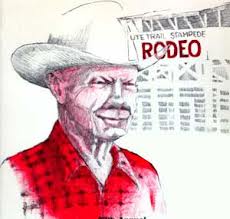
When Woodland Park's legendary figure "Big Bert" Bergstrom died on March 12, 1986, more than 500 people filed past his casket a few days later at Woodland Park Saddle Club Arena in the center of town.
A fitting tribute for the founder and main benefactor of the Woodland Park Santa Claus Club, the man who donated the ground for the Saddle Club itself, and the owner of several area gambling dens and houses of ill repute.
Even today, stories swirl around in the thin mountain air about the "big Swede" with heart of gold and a community conscience, along with the far-reaching illegal operations to help finance them.
A fitting tribute for the founder and main benefactor of the Woodland Park Santa Claus Club, the man who donated the ground for the Saddle Club itself, and the owner of several area gambling dens and houses of ill repute.
Even today, stories swirl around in the thin mountain air about the "big Swede" with heart of gold and a community conscience, along with the far-reaching illegal operations to help finance them.
“Through the generosity of Bert Bergstrom, new rodeo grounds were made available in the fall of ’49. The new grounds are located in the center of town, south of the business section. With the co-operation of the people of the county and active members of the Saddle Club, the new grounds are being completed with a race track and a grand stand to be built later,” reported the View.
A few years ago, in a conversation with Oscar Lindholm, who was 93 at the time, Bert Bergstrom was remembered as a “big, rough, tough Swede, saloonkeeper at the Ute Inn, 231 pounds, that could drink quite lot of beer.”
Oscar acknowledged, at the time, he could go through a fair amount of beer himself. But Big Bert and Oscar were not alone, especially when the Stampede was in town.
“… With the casino blaring away, all the local night spots lit up (and others?) and the square dance at the school ‘fillin’ up the floor’, Everybody had a GOOD TIME,” according the 1950’ article in the paper.
Cowboys and spectator alike agreed, “It is the best arena in the state and so beautifully situated with Pikes Peak and the breath-taking mountain scenery in the background,” reported the View.
A few years ago, in a conversation with Oscar Lindholm, who was 93 at the time, Bert Bergstrom was remembered as a “big, rough, tough Swede, saloonkeeper at the Ute Inn, 231 pounds, that could drink quite lot of beer.”
Oscar acknowledged, at the time, he could go through a fair amount of beer himself. But Big Bert and Oscar were not alone, especially when the Stampede was in town.
“… With the casino blaring away, all the local night spots lit up (and others?) and the square dance at the school ‘fillin’ up the floor’, Everybody had a GOOD TIME,” according the 1950’ article in the paper.
Cowboys and spectator alike agreed, “It is the best arena in the state and so beautifully situated with Pikes Peak and the breath-taking mountain scenery in the background,” reported the View.
Gabe Brock, longtime owner of the Crystola Inn, remembered and verified gambling in Woodland Park in the late 1940s and the early 1950s.
"He had 75 slot machines and I had 75 slot machines. We pooled them and put them out all over the county. We had sanction from Teller County Sheriff. We went along there for about four years without any trouble. We would rake a little off each week and with that we build the Woodland Park Community Church. The VFW was in trouble, and Bert bought them a building behind the Ute Inn," remembered Brock, as quoted by Marron of the Courier.
The Eldorado Club, which later became Preschool in the Pines, was also one of Bert's gambling clubs, Brock told the paper.
"The proceeds from gambling built a lot of Woodland Park," he said, but it all ended in 1952 when a new mayor closed things down, according to Brock.
"He had 75 slot machines and I had 75 slot machines. We pooled them and put them out all over the county. We had sanction from Teller County Sheriff. We went along there for about four years without any trouble. We would rake a little off each week and with that we build the Woodland Park Community Church. The VFW was in trouble, and Bert bought them a building behind the Ute Inn," remembered Brock, as quoted by Marron of the Courier.
The Eldorado Club, which later became Preschool in the Pines, was also one of Bert's gambling clubs, Brock told the paper.
"The proceeds from gambling built a lot of Woodland Park," he said, but it all ended in 1952 when a new mayor closed things down, according to Brock.

She married in 1858 at the age of 25.
Her first husband, Simon A. Harker, a clerk in the office of Adeline's brother, an Indian trading post located in now what is the state of Oklahoma.
Simon Harker filed a claim for 160 acres under the new Homestead Act, but his claim was contested. and ended up with 80 acres. In 1861, the family moved to a point north of Denver along the South Platte River. Simon died in 1864, partly as a result of the Cherry Creek flood, leaving Adeline with three small children.
Adeline purchased the 80 acres two years prior to "proving up" the homestead. She then married Elliot Hornbek and to them a son was born. It is not certain what happened to Mr. Hornbek, but by 1875, he had disappeared.
In 1878 at the age of 44, Adeline Hornbek moved to the Florissant Valley on land that was to become part of the Florissant Fossil Beds National Monument.
According to Colorado historian Kenneth Jessen,
"On her land, she had native grass, water and timber -- ideal for ranching. She cultivated two acres for potatoes and vegetables. She cut the hay from the native grass and had a herd of over 100 cows. She also had horses, pigs and poultry. While raising her four children, she found time to work on the Florissant School Board and at a local store."
At the age of 66 she married for the third time to the much younger Frederick Sticksel, a German immigrant who was working for her.
Adeline Warfield Harker Hornbek Sticksel died five years later. Her children stayed in the Florissant area, and son Elliot Hornbek became a deputy sheriff in Rio Blanco County.
Woods Brothers
The city of Victor, was founded in 1893 by the Woods Brothers and named for Victor Adams who fathered the town of Lawrence, southwest of Victor on Wilson Creek in 1892. The Woods Brothers made their original fortune with the Gold Coin Mine in Victor, which they discovered while digging a basement for a hotel. With some of their fortune they built mansions in Colorado Springs on Wood Avenue and other Cripple Creek district miners followed suit to create a “Millionaires Row” that is still partially intact today.
Despite many other impressive projects in the district, Warren, Harry and Frank Woods’ largest project was probably the power plant that supplied Victor, Cripple Creek and Pueblo with hydroelectric power. Impressive, because such projects are measured against the founding of the town itself, the development of the Gold Coin, United Mines Transportation Tunnel, and other mining interests and the foundation of the First National Bank of Victor and the Golden Crescent Water and Light Company. Southern Colorado Power Company and is a descendent of Pikes Peak Power Company.
The company was formed on Sept. 2, 1899 and was located on Beaver Creek, according to an article penned Kenneth W. Geddes for Pikes Peak Westerners Posse in 1979.
“All in all, eighteen miles of stream were covered. The area is some of the most rugged, inaccessible terrain in Teller and Fremont Counties, and the streams are noted for extreme differences in elevation in short distances,” wrote Geddes.
Original plans contemplated the construction of a dam and three power stations but only the first was ever built and operated. Geddes says that no expense was spared in the construction of the dam and plant and it involved, among other things, the building of its own railroad and the blasting off of an adjoining hilltop with a car of powder. Also the cable car was the only means of accessing the plant other than climbing.
“A trip on the Short Line might bankrupt the English language, but it was almost a prairie run in comparison to the Skaguay cable car trip,” noted Geddes. “The isolation from the outside world created a real life Shangri-La.”
The company was formed on Sept. 2, 1899 and was located on Beaver Creek, according to an article penned Kenneth W. Geddes for Pikes Peak Westerners Posse in 1979.
“All in all, eighteen miles of stream were covered. The area is some of the most rugged, inaccessible terrain in Teller and Fremont Counties, and the streams are noted for extreme differences in elevation in short distances,” wrote Geddes.
Original plans contemplated the construction of a dam and three power stations but only the first was ever built and operated. Geddes says that no expense was spared in the construction of the dam and plant and it involved, among other things, the building of its own railroad and the blasting off of an adjoining hilltop with a car of powder. Also the cable car was the only means of accessing the plant other than climbing.
“A trip on the Short Line might bankrupt the English language, but it was almost a prairie run in comparison to the Skaguay cable car trip,” noted Geddes. “The isolation from the outside world created a real life Shangri-La.”


