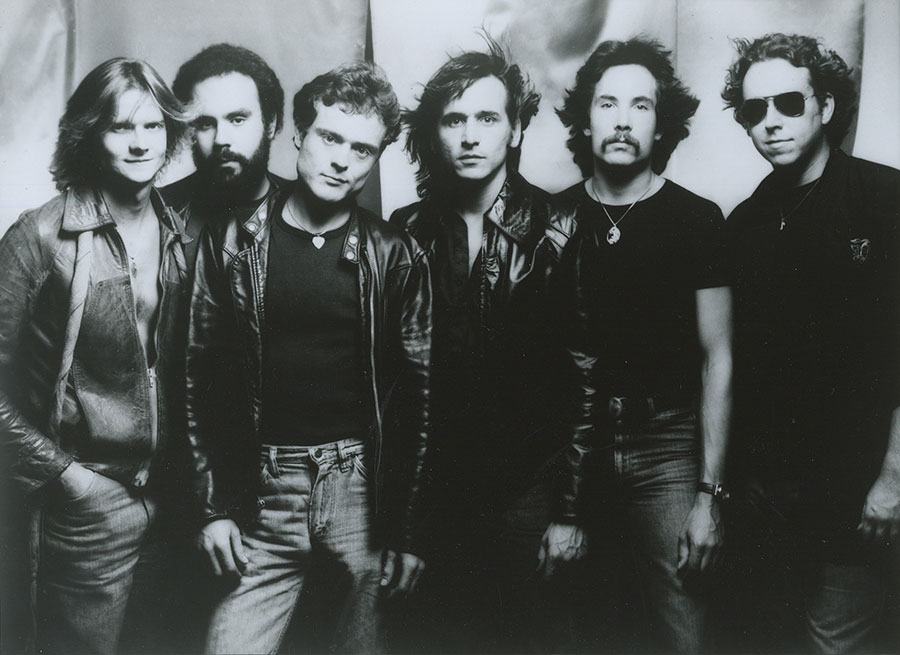
I said, Buddy, I'm afraid to be alone
'Cause I got some weird ideas in my head
About things to do in Denver when you're dead
I was working on a steak the other day
And I saw Waddy in the Rattlesnake Cafe
Dressed in black, tossing back a shot of rye
Finding things to do in Denver when you die
___ Waddy Wachtel / Warren Zevon / Leroy Marinell

Warren, Crystal and Ariel Zevon in 1978, from "I'll Sleep when I'm Dead."

Warren Zevon and Hunter Thompson in Aspen.
"Singer-songwriter Zevon’s ironic tales of physical and psychological mayhem had earned him a cult following, and he was dubbed “the Sam Peckinpah of rock” after the director who opened the door for graphic violence in movies. In 1978, he’d had a Top 10 single with “Werewolves of London.” But his career was temporarily set back by alcoholism, Brown wrote.
"After a year in the studio and “in training,” Zevon’s 1980 release, Bad Luck Streak in Dancing School, represented something of a comeback for him, and he was eager to tour. First, he enlisted the aid of East Coast guitar ace David Landau. Then he met the group called Boulder,
Boulder was seven players, most of them writers and five of them singers. The nucleus formed in Florida in 1972, and the other members, all veterans of bar bands throughout the U.S., joined in installments. The act was complete by 1976, when the members relocated to Colorado and acquired their name.
"Boulder did college and club dates, but the members were wary of becoming a copy band and burning out on the road. They finally built their own rehearsal studio in a two-car garage in the vicinity of Denver, says Brown.
“One of our roadies was a carpenter, and we went all out with hammers and nails and plasterboard,” drummer Marty Stinger recalled.
A lifelong fan of hardboiled fiction, Zevon was friendly with several well-known writers, who also collaborated on his songwriting during this period, including Thompson, Carl Hiaasen and Mitch Albom. Zevon also served as musical coordinator and occasional guitarist for an ad-hoc rock music group called the Rock Bottom Remainders, a collection of writers performing rock-and-roll standards at book fairs and other events. The group included Stephen King, Dave Barry, Matt Groening and Amy Tan, among other popular writers, and it has continued to perform one benefit concert per year since Zevon's death.
During the early 1970s, Zevon toured regularly with the Everly Brothers as keyboard player, band leader, and musical coordinator. Later the same decade, he toured with Don Everly and Phil Everly separately, as they tried to launch solo careers after their breakup.
These small successes were not particularly rewarding financially, and Zevon's dissatisfaction with his career (and a lack of funds) led him to briefly move to Spain in the summer of 1975. There he lived and played in the Dubliner Bar, a small tavern in Sitges, near Barcelona, owned by David Lindell, a former mercenary. Together they composed "Roland the Headless Thompson Gunner".
"Crystal Zevon and a girl in that family became best friends, and Zevon wanted to invite her friend for a sleepover. Her parents said no. When Zevon asked why, she was told it might not be good for her parents' business."
"The hypocrisy hit me over the head," Crystal Zevon said. "That set me off. And I started to learn what was going on."
Crystal's Zevon's parents later said it was the worst mistake they made.
"The year after the prohibited sleepover, when Zevon was 12, she learned Martin Luther King would be in Denver. She stole money from the motel cash box and bought a bus ticket to Denver. At Loveland Pass, the bus stopped, state troopers boarded it and escorted her off. They delivered Zevon to her parents in Aspen."
In 1967, Crystal Zevon lived in the Mad River Valley in Vermont with guitarist Waddy Wachtel. He was playing in a band called Twice Nicely, the house band at the (defunct) Blue Tooth.
Wachtel became a well-known session player in L.A., where he played with Warren Zevon, the late singer-songwriter whom Crystal Zevon married in the 1970s.


Warren, Crystal and Ariel Zevon in 1978, from "I'll Sleep when I'm Dead."
Links abound here in Centennial state to odd song bird
By Rob Carrigan, robcarrigan1@gmail.com
You can tell a lot about a person by finding out what is their favorite Warren Zevon song. Some folks are only familiar with "Werewolves of London." Others know about his writing credits for Linda Ronstadt, and the resultant success there, and yet, some on-the-edge characters enjoy the strange world he accesses in twisted tunes such "Excitable Boy," and violence of "Rolland, The Headless Thompson Gunner."
But all might be surprised by his links to Colorado.
“My ex-wife grew up in Aspen, which is a sort of rarity, I presume,” Zevon explained. “So we ended up there. A friend of mine was running for Council (City of Aspen), and late one night in the Hotel Jerome bar, I said that if he won, I wanted to be appointed coroner. He said, ‘Well, it is an appointment.’ He won, and I was. I think of it like a perpetuity,” says an article by Colorado music historian G. Brown, of The Colorado Music Experience, a non-profit organization established to preserve the legacy of Colorado music, serves as a repository for informational and archival resources and presents them in intriguing, engaging and entertaining ways.

Warren Zevon and Hunter Thompson in Aspen.
Zevon's longtime friend, writer Hunter Thompson, at about the same time was running for Sheriff of Pitkin County representing "the Freak Party," and Zevon mentioned the supposed appointment on several of his early visits to the David Letterman Show.
"Singer-songwriter Zevon’s ironic tales of physical and psychological mayhem had earned him a cult following, and he was dubbed “the Sam Peckinpah of rock” after the director who opened the door for graphic violence in movies. In 1978, he’d had a Top 10 single with “Werewolves of London.” But his career was temporarily set back by alcoholism, Brown wrote.
"After a year in the studio and “in training,” Zevon’s 1980 release, Bad Luck Streak in Dancing School, represented something of a comeback for him, and he was eager to tour. First, he enlisted the aid of East Coast guitar ace David Landau. Then he met the group called Boulder,
Boulder was seven players, most of them writers and five of them singers. The nucleus formed in Florida in 1972, and the other members, all veterans of bar bands throughout the U.S., joined in installments. The act was complete by 1976, when the members relocated to Colorado and acquired their name.
"Boulder did college and club dates, but the members were wary of becoming a copy band and burning out on the road. They finally built their own rehearsal studio in a two-car garage in the vicinity of Denver, says Brown.
“One of our roadies was a carpenter, and we went all out with hammers and nails and plasterboard,” drummer Marty Stinger recalled.
A lifelong fan of hardboiled fiction, Zevon was friendly with several well-known writers, who also collaborated on his songwriting during this period, including Thompson, Carl Hiaasen and Mitch Albom. Zevon also served as musical coordinator and occasional guitarist for an ad-hoc rock music group called the Rock Bottom Remainders, a collection of writers performing rock-and-roll standards at book fairs and other events. The group included Stephen King, Dave Barry, Matt Groening and Amy Tan, among other popular writers, and it has continued to perform one benefit concert per year since Zevon's death.
During the early 1970s, Zevon toured regularly with the Everly Brothers as keyboard player, band leader, and musical coordinator. Later the same decade, he toured with Don Everly and Phil Everly separately, as they tried to launch solo careers after their breakup.
These small successes were not particularly rewarding financially, and Zevon's dissatisfaction with his career (and a lack of funds) led him to briefly move to Spain in the summer of 1975. There he lived and played in the Dubliner Bar, a small tavern in Sitges, near Barcelona, owned by David Lindell, a former mercenary. Together they composed "Roland the Headless Thompson Gunner".
By September 1975, Zevon had returned to Los Angeles, where he roomed with Stevie Nicks and Lindsey Buckingham, who had by now gained fame as members of Fleetwood Mac.There he collaborated with Jackson Browne, who produced and promoted Zevon's self-titled major-label debut in 1976.Contributors to the album included Nicks, Buckingham, Mick Fleetwood, John McVie, members of the Eagles, Carl Wilson, Linda Ronstadt, and Bonnie Raitt. Ronstadt elected to record many of his songs, including "Hasten Down the Wind", "Carmelita", "Poor Poor Pitiful Me", and "Mohammed's Radio." Zevon's first tour, in 1977, included guest appearances in the middle of Jackson Browne concerts, one of which is documented on a widely circulated bootleg recording of a Dutch radio program under the title "The Offender Meets the Pretender." Zevon reportedly lived with Browne in Hollywood Hawaiian Hotel for a short time.
Boulder began recording material in Florida in January 1978 and did additional work at Caribou Ranch in Colorado. The band signed with Elektra/Asylum Records in November and moved to Los Angeles. The debut album, Boulder, included a version of Zevon’s “Join Me in L.A.”
“We liked the theme of the song, and we were moving to L.A., where we’d never been before,” lead singer Bob Harris explained.
So Zevon took to the road, not with the L.A. session guys from his albums, but with the little-known Colorado group. The so-called audition consisted of a spirited version of “Johnny B. Goode.” Zevon’s somewhat sudden decision to record his new touring band in concert spoke volumes about the guy’s essential rock ’n’ roll attitude.
“The idea always appeals to me to find a self-contained band, or at least find musicians who are accustomed to playing with each other,” he said.
The difference was apparent on the live recording, Stand in the Fire, cut at the Roxy in Los Angeles. One of Zevon’s best albums, Rolling Stone called it “a portrait of the artist defiantly walking the line between emotional exorcism and mass entertainment.”
Zevon often performed shirtless on the summer tour, which was titled “The Dog Ate the Part We Didn’t Like,” a line borrowed from his friend, novelist Thomas McGuane.
“That was the culmination of a two-year physical fitness period in my life. I think I was celebrating the Chuck Norris-like physique of that era,” Zevon said.
“It was a real turning point for Warren because he had just gotten out of rehab and kicked the bottle,” Harris said. “He had this incredible amount of energy. All of a sudden, he knew where to put it, and he could turn it into being good.
“He went to some tailor in Beverly Hills and bought these $1,200 suits and was going to play in them—he’d been doing dancing and karate and was going to come across really classy. And about two weeks into the tour, he’d ripped the pants and the coats just leaping around on stage. So after that, he went out in blue jeans and t-shirt.
“Seeing him onstage every night, he was probably the most consistent performer I’ve ever seen. On the bus one night, he said, ‘Man, I had to realize that these people out here are my friends.’ It went from being good to phenomenal.”
But the success wasn’t enough to keep Boulder going.
“The producer from Elektra scammed the whole deal and screwed the band—which is not an uncommon situation, but we had our turn at it,” Harris said.
Meanwhile, Zevon continued his solo career. Time magazine’s reviewers gave “Song Title of the Year” to his rollicking “Things to Do in Denver When You’re Dead” from Mr. Bad Example, his 11th album. People magazine called it “a hoot.”
“Um, it had to be a two-syllable town—Indianapolis wouldn’t work,” Zevon explained. “It had to start with a ‘D.’ It had to have a Rattlesnake Cafe. Those were kind of the parameters. Everyone seemed to enjoy it the last time I played Colorado.”
In 2003, Zevon died of mesothelioma, a form of lung cancer, at age 56.
"Even by rock-star standards, Warren Zevon was an Exhibit A crash case waiting to happen (“trouble waiting to happen” was a typical Zevon lyric). In the end, though, it wasn’t the drinking, smoking and acid, or the guns, pills and womanizing, that took him in his mid-50s, but a rare case of a quick, lethal cancer. Although clean and sober in the 18 years before his diagnosis (he was even an ex-smoker for five years), when Zevon was given three months to live in 2002, he treated it as both a gift and a death sentence. His old friend, David Letterman, devoted an entire “Late Show” evening as a tribute, and the world suddenly knew Zevon was about to go. Friends (Bruce Springsteen, Jackson Browne, Don Henley, among others) showed up to help on his final album, “The Wind.” There was the inevitable VH-1 special.
Boulder began recording material in Florida in January 1978 and did additional work at Caribou Ranch in Colorado. The band signed with Elektra/Asylum Records in November and moved to Los Angeles. The debut album, Boulder, included a version of Zevon’s “Join Me in L.A.”
“We liked the theme of the song, and we were moving to L.A., where we’d never been before,” lead singer Bob Harris explained.
So Zevon took to the road, not with the L.A. session guys from his albums, but with the little-known Colorado group. The so-called audition consisted of a spirited version of “Johnny B. Goode.” Zevon’s somewhat sudden decision to record his new touring band in concert spoke volumes about the guy’s essential rock ’n’ roll attitude.
“The idea always appeals to me to find a self-contained band, or at least find musicians who are accustomed to playing with each other,” he said.
The difference was apparent on the live recording, Stand in the Fire, cut at the Roxy in Los Angeles. One of Zevon’s best albums, Rolling Stone called it “a portrait of the artist defiantly walking the line between emotional exorcism and mass entertainment.”
Zevon often performed shirtless on the summer tour, which was titled “The Dog Ate the Part We Didn’t Like,” a line borrowed from his friend, novelist Thomas McGuane.
“That was the culmination of a two-year physical fitness period in my life. I think I was celebrating the Chuck Norris-like physique of that era,” Zevon said.
“It was a real turning point for Warren because he had just gotten out of rehab and kicked the bottle,” Harris said. “He had this incredible amount of energy. All of a sudden, he knew where to put it, and he could turn it into being good.
“He went to some tailor in Beverly Hills and bought these $1,200 suits and was going to play in them—he’d been doing dancing and karate and was going to come across really classy. And about two weeks into the tour, he’d ripped the pants and the coats just leaping around on stage. So after that, he went out in blue jeans and t-shirt.
“Seeing him onstage every night, he was probably the most consistent performer I’ve ever seen. On the bus one night, he said, ‘Man, I had to realize that these people out here are my friends.’ It went from being good to phenomenal.”
But the success wasn’t enough to keep Boulder going.
“The producer from Elektra scammed the whole deal and screwed the band—which is not an uncommon situation, but we had our turn at it,” Harris said.
Meanwhile, Zevon continued his solo career. Time magazine’s reviewers gave “Song Title of the Year” to his rollicking “Things to Do in Denver When You’re Dead” from Mr. Bad Example, his 11th album. People magazine called it “a hoot.”
“Um, it had to be a two-syllable town—Indianapolis wouldn’t work,” Zevon explained. “It had to start with a ‘D.’ It had to have a Rattlesnake Cafe. Those were kind of the parameters. Everyone seemed to enjoy it the last time I played Colorado.”
In 2003, Zevon died of mesothelioma, a form of lung cancer, at age 56.
From The New York Times obituary:
Warren Zevon, a singer and songwriter who came up with hard-boiled stories and tender confessions of love, died on Sunday at his home in Los Angeles. He was 56.
The cause was cancer, which was diagnosed last summer.
Mr. Zevon had a pulp-fiction imagination that yielded songs like "Werewolves of London," "Poor, Poor Pitiful Me," "Lawyers, Guns and Money" and "I'll Sleep When I'm Dead." They were terse, action-packed, gallows-humored tales that could sketch an entire screenplay in four minutes and often had death as a punchline. But there was also vulnerability and longing in Mr. Zevon's ballads, like
"Mutineer," "Accidentally Like a Martyr" and "Hasten, Down the Wind."
Behind Mr. Zevon's stoic baritone, the music changed with its central instrument. His piano songs suggested marches, hymns and the harmonies of Aaron Copland, while his guitar songs connected rock, Celtic and country music.
Mr. Zevon made his last album, "The Wind" (Artemis), knowing that his time was running out. In August 2002, a week after deciding to start a new album, Mr. Zevon felt
chest pains while exercising and eventually went to see a physician for the first time in 20 years.
A lifelong smoker, Mr. Zevon was diagnosed with mesothelioma, a type of tumor that can occur in the
membranes around the lungs, that had advanced too far for treatment, and given a few months to live. He choseto work on the album, completed it and lived to see it released this year, on Aug. 26. In an interview last year, he said that the diagnosis had led to "the intensest
creative period of my life."
Mr. Zevon was prized by other songwriters. Bob Dylan performed his songs on stage and performers on "The Wind" included Bruce Springsteen, Jackson Browne, Tom Petty, Emmylou Harris, Don Henley, Ry Cooder and Dwight Yoakam. Mr. Springteen has described Mr. Zevon as writing about "the good, the bad and the ugly" and called him "a moralist in cynic's clothing."
Mr. Zevon was born in Chicago but grew up in Arizona and Los Angeles. His father, he said in an interview, was a Russian-Jewish gangster; his mother was a Mormon and often in fragile health. Mr. Zevon studied classical piano, idolizing composers like Stravinsky and Copland, and picked up guitar as a teenager. When his parents divorced, he drove a sports car his father had won in a card game to New York City to try to make it on the folk circuit.
But he had better luck in Los Angeles, where he formed the duo Lyme and Cybelle with a friend, Tule Livingstone, and began getting his songs heard. The Turtles made one of his songs, "Like the Seasons," the B side of the hit single "Happy Together," providing royalties that paid his rent for years.
Mr. Zevon's first album, "Wanted Dead or Alive," was released in 1969 and widely ignored. He worked around Los Angeles, writing commercial jingles and leading the Everly Brothers' backup band. And he made his way into the coterie of songwriters, among them Jackson Browne and J.D. Souther, that was bringing new depth to the California soft-rock of the mid-1970's.
Linda Ronstadt chose "Hasten Down the Wind" to be the title song of her 1976 album, the same year that
Jackson Browne produced Mr. Zevon's major-label debut album, "Warren Zevon." Two years later, Mr.
Zevon's album "Excitable Boy" reached the Top 10 with its own hit single, "Werewolves of London." He was married and divorced twice in the 1970's and 1980's, and had two children, Jordan and Ariel. They survive him along with two grandchildren. Jordan Zevon was the executive producer of "The Wind."
Success brought pressure and temptations, and Mr. Zevon succumbed: taking drugs and alcohol, toting a
gun, losing control onstage. "I ran around like a psychotic," he said.
He made no albums between 1982 and 1987, and spent time in rehab. He considered alcoholism "a coward's death," he said in 1981. And he re-emerged to a steady, well-respected career. He toured and made albums that included "Transverse City" in 1989, "Mr. Bad Example" in 1991, "Mutineer" in 1995 and "Life'll Kill Ya" in 2000.
Members of R.E.M. backed Mr. Zevon on his 1987 album "Sentimental Hygiene"; other songs they recorded together were released under the name of Hindu Love Gods in 1990. In the early 1990's, Mr.
Zevon also wrote theme songs and scores for television series - "Tales from the Crypt," "Route 66,"
"Tekwar" - and he was a frequent guest bandleader on David Letterman's late-night show.
When he was diagnosed with cancer, Mr. Zevon was the first to recognize that songs like "My Ride's Here,"about a hearse, had become self-fulfilling prophecies. "I keep asking myself how I suddenly was thrust into the position of travel agent for death," he said last year. "But then, of course, the whole point of why it's so strange is that I had already assigned myself that role so many years of writing ago." He allowed a camera crew from VH1 to make a documentary during the recording sessions.
"The Wind" has death-haunted songs like "Prison Grove" and "Keep Me in Your Heart," as well as a version of Mr. Dylan's song about a dying sheriff, "Knockin' on Heaven's Door." But songs like "Disorder in the House" maintain Mr. Zevon's old sardonic humor. While he was recording
the album, Mr. Zevon said he was planning to write goodbyes to people and to make one other point: that, he said, "This was a nice deal: life."
And later Lucy Mohl wrote a great review of ex-wife Crystal Zevon's tell-all book "I'll Sleep When I'm Dead." Mohl is a senior features producer for seattletimes.com. Crystal Zevon, foreword by Carl Hiaasen
"Even by rock-star standards, Warren Zevon was an Exhibit A crash case waiting to happen (“trouble waiting to happen” was a typical Zevon lyric). In the end, though, it wasn’t the drinking, smoking and acid, or the guns, pills and womanizing, that took him in his mid-50s, but a rare case of a quick, lethal cancer. Although clean and sober in the 18 years before his diagnosis (he was even an ex-smoker for five years), when Zevon was given three months to live in 2002, he treated it as both a gift and a death sentence. His old friend, David Letterman, devoted an entire “Late Show” evening as a tribute, and the world suddenly knew Zevon was about to go. Friends (Bruce Springsteen, Jackson Browne, Don Henley, among others) showed up to help on his final album, “The Wind.” There was the inevitable VH-1 special.
On Sept. 7, 2003, Zevon died at home.
On the one hand, it sounds like a sad but well-planned moment, as recounted in “I’ll Sleep When I’m Dead”:
“Jordan Zevon, Warren’s son: Driving over, I remember thinking, Dad always knew what was coming. He planned his life, he planned his career, and he was prepared for the end. I mean, I don’t think he ever expected to be an old man. He would have hated that.”
On the other hand, it was Warren Zevon:
“Jordan Zevon: After everyone left, I got to clean out the porn. That was my job. That’s what we discussed, Dad and me … If he passed away, I was supposed to go in there and get out the porn. The thing was, I thought it going to be … X-rated videos … [but] it was porn of him. And women. He made them himself.”
As Bonnie Raitt comments in the book, “We had to be truly twisted to be able to get Warren — and I mean that in a good way.”
"It’s too bad one part of his audience will know Zevon only for “Werewolves of London,” the song he composed in about 15 minutes and is destined to survive as long as there are frat parties. There are many edgier songs, such as “Excitable Boy” or the titles no one else could have written: “Roland the Headless Thompson Gunner,” “Bad Luck Streak in Dancing School,” “Boom-Boom Mancini.”
"You run out of adjectives before finding all the ways to describe Zevon’s music, and especially his lyrics," writes Mohl.
On the one hand, it sounds like a sad but well-planned moment, as recounted in “I’ll Sleep When I’m Dead”:
“Jordan Zevon, Warren’s son: Driving over, I remember thinking, Dad always knew what was coming. He planned his life, he planned his career, and he was prepared for the end. I mean, I don’t think he ever expected to be an old man. He would have hated that.”
On the other hand, it was Warren Zevon:
“Jordan Zevon: After everyone left, I got to clean out the porn. That was my job. That’s what we discussed, Dad and me … If he passed away, I was supposed to go in there and get out the porn. The thing was, I thought it going to be … X-rated videos … [but] it was porn of him. And women. He made them himself.”
As Bonnie Raitt comments in the book, “We had to be truly twisted to be able to get Warren — and I mean that in a good way.”
"It’s too bad one part of his audience will know Zevon only for “Werewolves of London,” the song he composed in about 15 minutes and is destined to survive as long as there are frat parties. There are many edgier songs, such as “Excitable Boy” or the titles no one else could have written: “Roland the Headless Thompson Gunner,” “Bad Luck Streak in Dancing School,” “Boom-Boom Mancini.”
"You run out of adjectives before finding all the ways to describe Zevon’s music, and especially his lyrics," writes Mohl.
"His dark, arch humor could produce a bad escapade with a few deft lines (“I was gambling in Havana / I took a little risk / Send lawyers, guns and money / Dad, get me out of this”). Or he could turn both sweet and sad in his poignant love songs, such as “Hasten Down the Wind,” which many think of as a Linda Ronstadt song but is quintessential Zevon: “He’s hanging on to half a heart / But he can’t have the restless part / So he tells her to hasten down the wind.”
"Crystal Zevon, his ex-wife, has pulled off a remarkable job as an interviewer and a nearly masochistic triumph as the chronicler of her husband’s bad behavior, including the affairs and heavy drinking and drug addiction that ricocheted into anyone connected to his life," Mohl says.
"At his request, she used his personal diaries and conversations with their daughter, his son from another relationship, ex-girlfriends, fellow musicians, friends. She gets the goods. Much of the story takes place long after their marriage ended, but clearly the relationship continued, and that quality of distance makes the book a tender song in itself."
Mohl suggests taking a quick look at the cast of characters interviewed at the end of the book (actually, read it first, since it introduces many names that will come and go). When “Stravinsky, Igor” is followed by “Thompson, Hunter S.,” you know there’s going to be something worth delving into here."
Among the odd tidbits, there’s Zevon’s history as the son of a petty Jewish gangster; the classical-music student who could notate music as quickly as anyone could write with a pen; and later, his spiraling into a full-blown case of obsessive-complusive disorder, with a heavy taste for hand-washing and gray T-shirts (and cars, and guitars).
"The book has a fine awareness of the times and the characters, establishing something of the pecking order of rock musicians, in which Zevon was revered by his best contemporaries but never quite in their ranks. It wasn’t odd to see him substitute for Paul Shaffer on a “Late Night” gig, or parody himself on “The Larry Sanders Show,” but it wasn’t what rock royalty did, either," writes Mohl.
At the same time, his talent attracted talent; before anyone outside of Athens, Ga., had heard of R.E.M., Zevon had them as backup on his great, post-detox album, “Sentimental Hygiene.” Because Neil Young was working in the room across the hall, he came over to play a solo on the title track. Then there was the day Bob Dylan just wandered into the studio during a session, as recalled by Zevon’s manager, Andy Slater:
And Mohl noted that not everyone has diary entries like this:
July 7, 1993 — Aspen
” … Fax from Hunter Thompson: ‘ … a peaceful drink before you go on so after we can stab some people.’ Called him from club — pleasant chat. I told him I had a headache from the altitude … he recommended oxygen, said he didn’t know what else would help — ‘Acid?’ “
"Crystal Zevon's interest in justice goes back more than half a century to her childhood in Aspen, Colo. She lived with her family in an apartment behind a small motel, the Glory Hole, owned by her parents. When Zevon (then Crystal Brelsford) was 11, a black family moved to Aspen from Memphis, Tenn., " writes Sally Pollak, of the Free Press, of Burlington, Vermont in later story about Crystal."Crystal Zevon, his ex-wife, has pulled off a remarkable job as an interviewer and a nearly masochistic triumph as the chronicler of her husband’s bad behavior, including the affairs and heavy drinking and drug addiction that ricocheted into anyone connected to his life," Mohl says.
"At his request, she used his personal diaries and conversations with their daughter, his son from another relationship, ex-girlfriends, fellow musicians, friends. She gets the goods. Much of the story takes place long after their marriage ended, but clearly the relationship continued, and that quality of distance makes the book a tender song in itself."
Mohl suggests taking a quick look at the cast of characters interviewed at the end of the book (actually, read it first, since it introduces many names that will come and go). When “Stravinsky, Igor” is followed by “Thompson, Hunter S.,” you know there’s going to be something worth delving into here."
Among the odd tidbits, there’s Zevon’s history as the son of a petty Jewish gangster; the classical-music student who could notate music as quickly as anyone could write with a pen; and later, his spiraling into a full-blown case of obsessive-complusive disorder, with a heavy taste for hand-washing and gray T-shirts (and cars, and guitars).
"The book has a fine awareness of the times and the characters, establishing something of the pecking order of rock musicians, in which Zevon was revered by his best contemporaries but never quite in their ranks. It wasn’t odd to see him substitute for Paul Shaffer on a “Late Night” gig, or parody himself on “The Larry Sanders Show,” but it wasn’t what rock royalty did, either," writes Mohl.
At the same time, his talent attracted talent; before anyone outside of Athens, Ga., had heard of R.E.M., Zevon had them as backup on his great, post-detox album, “Sentimental Hygiene.” Because Neil Young was working in the room across the hall, he came over to play a solo on the title track. Then there was the day Bob Dylan just wandered into the studio during a session, as recalled by Zevon’s manager, Andy Slater:
And Mohl noted that not everyone has diary entries like this:
July 7, 1993 — Aspen
” … Fax from Hunter Thompson: ‘ … a peaceful drink before you go on so after we can stab some people.’ Called him from club — pleasant chat. I told him I had a headache from the altitude … he recommended oxygen, said he didn’t know what else would help — ‘Acid?’ “
"Crystal Zevon and a girl in that family became best friends, and Zevon wanted to invite her friend for a sleepover. Her parents said no. When Zevon asked why, she was told it might not be good for her parents' business."
"The hypocrisy hit me over the head," Crystal Zevon said. "That set me off. And I started to learn what was going on."
Crystal's Zevon's parents later said it was the worst mistake they made.
"The year after the prohibited sleepover, when Zevon was 12, she learned Martin Luther King would be in Denver. She stole money from the motel cash box and bought a bus ticket to Denver. At Loveland Pass, the bus stopped, state troopers boarded it and escorted her off. They delivered Zevon to her parents in Aspen."
Wachtel became a well-known session player in L.A., where he played with Warren Zevon, the late singer-songwriter whom Crystal Zevon married in the 1970s.

Warren Zevon and Waddy Wachtel.
"Zevon, is an activist who has worked in her own neighborhood, and on the other side of the world. She fights for economic justice and protests against war. She will take a cause to Congress through legislation, and sleep in the street in the nation's capital. Zevon's interests concern climate change, economic justice, peace, the Israeli-Palestinian conflict, poverty and education. Her approach to the issues can be as varied as the cause," writes Sally Pollak, of the Free Press, of Burlington, Vermont.
In May 2001, Warren Zevon joined Thompson, historian Douglas Brinkley and others in protesting the prison term of Lisl Ellen Auman, sentenced to life for her role in the 1997 killing of a Colorado
police officer. "Personally, I'm known to be a kind of law-and-order guy," he told the Denver Rocky Mountain News. "I believe in our system. . . . But every now and then, our system throws people away."
An appellate court upheld Auman's sentence in September 2002.
"Things to Do in Denver When You're Dead" is a 1995 American crime film directed by Gary Fleder and written by Scott Rosenberg. The film features an ensemble cast that includes Andy García, Christopher Lloyd, Treat Williams, Steve Buscemi, Christopher Walken, Fairuza Balk and Gabrielle Anwar.
The film's title comes from the Warren Zevon song of the same name, recorded on his 1991 album "Mr. Bad Example," which he allowed under the condition that the song be played during the end credits. The lead character's name, "Jimmy the Saint," comes from the Bruce Springsteen song "Lost in the Flood" from the album Greetings from Asbury Park, N.J.
The film was a box office bomb and received negative reviews from critics, with many dismissing as a "Pulp Fiction clone."
police officer. "Personally, I'm known to be a kind of law-and-order guy," he told the Denver Rocky Mountain News. "I believe in our system. . . . But every now and then, our system throws people away."
An appellate court upheld Auman's sentence in September 2002.
The film's title comes from the Warren Zevon song of the same name, recorded on his 1991 album "Mr. Bad Example," which he allowed under the condition that the song be played during the end credits. The lead character's name, "Jimmy the Saint," comes from the Bruce Springsteen song "Lost in the Flood" from the album Greetings from Asbury Park, N.J.
The film was a box office bomb and received negative reviews from critics, with many dismissing as a "Pulp Fiction clone."