Showing posts with label Otto Mears. Show all posts

Thursday, October 16, 2014

Blacksmith, architect, model builder, preservationist, Ross pounds it out with precision


There is a Finish proverb that holds 'No one is a blacksmith when they are born.' But sometimes, a deep interest in history, a gift for precision, strong focus on detail, and an opportunity to learn — point folks in that direction.  Lowell Ross, of Woodland Park, was practicing the craft Saturday afternoon Oct. 11, at the Western Museum of Mining and Industry, near Northgate Road and I-25. 
"It hasn't been working much since the 1990s," Ross said of the WMMI smith works, as he pounded out several curved knives at demonstrations during the weekend harvest festival. He thinks he might have been the last one operating it, in about 2001.
"Our Blacksmith shop is now up and running and we had blacksmithing demonstrations this weekend at our Reynolds Ranch Harvest Festival," said WMMI director Jeff Tapparo about Friday's and Saturday's (Oct. 10 and 11) events. 
Ross said there are eventual plans to restore completely, the complex line shaft machine shop that incorporates trip wheels, clutch mechanisms, and flat belts to power grinders, drills and other equipment.
He picked up the trade watching a few old timers that knew a thing or two about black smithing and the skills go hand-in-hand with his day job.  He is an architect with Fine Line Design Studio, LLC,  of Woodland Park. 
"I’ve been a practicing architect for years, designing commercial and residential structures throughout the world.  I have also been building professional commercial models for clients all over the county."  He also professes a love of history that has helped in the creation of Anvil Mountain Models, a sideline that develops historically accurate scale models.  
"I started scratch building scale models in my early childhood, winning my first model contest at age 14.  Since then many of my models have won national awards  – best of show and several first place awards at National Narrow Gauge Conventions.  Being an architect, I offer well thought out kits with innovative and time saving techniques and clear comprehensive instructions.""At a very early age my family spent our free time exploring old ghost towns and mine sites, fostering a love for historic structures.  Since childhood I’ve continued to explore old mine sites and ghost towns throughout the United States, and have spent countless hours hiking to hundreds of remote mills/mines/ghost towns," he said.
"My personal sketch books are full of detail drawings documenting these sites and great old structures.  Living in Colorado allows me the opportunity to continue exploring many historic sites.   In the 1990’s I lived in Telluride and Ouray Colorado during which I fell in love with the history and beauty of the San Juan Mountains.  Since then I have spent a considerable amount of time researching and documenting many of the structures throughout the San Juan's – many of which are from Silverton." 
"The kits I offer come from these years of research and documentation. I personally model Otto Mears' three railroads with a special emphasis on the Silverton Northern.  Many of the kits offered and future offerings will reflect my personal interests."
To top that off, he is also restoring, in his shop locally, RGS Inspection Car #1, rebuilt from a converted Model T Ford, as an inspection vehicle for Superintendent W.D. Lee on the Rio Grande Southern. Although not a Goose, the forerunner perhaps led to development. It rolled into the Dolores River according to the lore in 1913, and Lee and his wife jumped before it hit the water. Road Master J. C. Gilland didn't, and was seriously hurt. Mrs. Lee reportedly refused to ride it after that mishap, saying it bounced too much. In 1925, it was wrecked again, this time, beyond repair, and was scrapped.
Locally, his accurate scale models appear in the Cripple Creek Heritage Center, a complex replica of the Will Rodgers Shrine of the Sun for  El Pomar, and new project that will replicate the tram line at the Buffalo Boy Mine for the Silverton Northern Interpretive Center. 
Ross said he started smithing in the 1990s when he wanted to create historically accurate brackets for one of his buildings and hired a blacksmith to build them. "They asked me if I wanted to give them a hand, and that was the start of it. "
 He says that typically, blacksmithing was a trade learned as master/apprentice but there are not those same opportunities available today. He estimates he spends about 1,200 to 1,500 hours a year at the craft — usually at three or four hours at a time, because it takes long time to get the forge hot. 
He would eventually like to develop it, as a business, perhaps with architectural hardware development as the focus. 
He has a lean-to type shop at home and plans for whole new building, where he might incorporate the use of two vintage air hammers (a 100-pound and 50-pound, the largest weighs nearly 4,000 pounds and takes up significant space. Plans also include line (modeled after the ones used from about 1918 to 1930) that enables him to run his other vintage equipment via flat belts and other related technology of the period... "my own mechanical mini-museum." 
Ross says a person can get into to smithing for near nothing, by using makeshift equipment in the form of an anvil made of railroad rail for $50 to $80, and brake drum modified  to become a bellows for the forge. But vintage anvils now go for about $5 per pound (which adds up with the weight of an anvil) and other equipment that was often scrapped in '70s and '80s as blacksmithing was seen somewhat of a 'dying art.'
Today, there has been a major resurgence. 
"Historically, it was fixing tools and making tools, wheelwrights, ferriers, and such. But recently there is a new-found appreciation for the art aspects based on raw skill and craftmanship. It goes along well with my work as an architect with the expression of joinery of materials, it is an easy transition..."
As an architect, the overlap for him is manifested in the economy of architectural preservation, joinery of timbers, and old-fashioned arts, used to build structures that place emphasis on beauty of material, structure and details. "Instead of taking any two pieces of material and unceremoniously slapping them together," Ross said.
Structures that locally that demonstrate some of that forethought include work that he has collaborated on including Keller Williams building in Woodland Park, structures at Sturman Industries, Focus on the Family, and many Church buildings all along the Front Range.


Saturday, October 10, 2009

Shining on Colorado's golden dome


By Rob Carrigan, robcarrigan1@gmail.com

When I worked in downtown Denver, everyday driving into work, I marveled at the golden dome of the capitol when I turn east onto Colfax Avenue from I-25. It is certainly not the highest building in the Denver skyline, but the shiny edifice off to the right stands out as unique, substantive, and respectable. Many mornings, the sun reflecting off the gilded hemisphere is occasion enough for sunglasses.
Gold is an impressive and appropriate material to cover the top of the state’s top government building. The precious metal helped build and pay for much of the ‘Centennial State’s’ growth and expansion.
It called out to the first Argonauts of 1859 and inspired their push for “Pikes Peak or Bust.” Later, the yellow metal made possible ‘the greatest gold camp in the world’ at Cripple Creek and Victor. Money earned in that district, transformed Colorado Springs into a world class tourist destination and paid for city, county and federal buildings all over town. Huge lumps were pulled from Clear Creek and the central mountains near Breckenridge. If California hadn’t beaten us to it by 10 years, we probably would be known as the Golden State.
But the dome wasn’t always golden. In fact the whole building had a bit of a troubled history. Henry Brown, (the same Brown who built another Denver landmark, the Brown Palace Hotel) donated the land for the building a full eight years before statehood in 1868, but because no fundraising was occurring at the time Colorado became a state, he filed a law suit, and put up a wooden fence around the property. The suit went all the way to the United States Supreme Court where Brown’s revocation of the property was rejected. Even so, builders didn’t turn a shovel on the new structure until 1886. And it was slow going for years afterward.
The first contractor encountered cost overruns early on and was replaced. The Detroit architect who designed the building, Elijah Meyers, was fired after two years on the job. The second architect, Pete Gumry, was killed in an explosion of another building. Striking quarry workers slowed construction. The third architect, James Murdoch, resigned after three years. Local architect, F.E. Edbrooke, (who had designed many local buildings including the Brown Palace) finally finished the job. It was Edbrooke who suggested that the dome be gilded with real Colorado gold. But that part of the project didn’t happen until 1908.
The original dome’s copper sheathing turned a dull greenish hue shortly after completion. A donation of 200 ounces of real Colorado gold, produced by the Colorado Mining Association at the urging of San Juan road-builder, newspaper founder, and general all-purpose pioneer, Otto Mears -- finished off the building. Of course, the price of gold wasn’t $1050 an ounce at that time.
It was re-gilded in 1948, again in1980 and once more in 1991.
“Atop the dome is a glass globe four feet in diameter that surrounds a beacon-like light bulb. Originally it was thought that a statue, of the "most beautiful woman in Colorado" was the most appropriate way to adorn the dome. One board member suggested his own daughter and with the female members of the legislature voting for themselves, the board did the politically correct thing and voted down the proposition,” according to virtual tour information at the state’s web site.
In the summer of 2009, Gov. Bill Ritter announced that plans to repair the golden dome were on hold, but the work was completed a few years later. The cast iron that made up the bulk of the dome was rusting and crumbling.
“But the state officials say the public is not in any danger. Visitors have not been allowed on the walkway around the dome since a 10-pound piece of cast iron fell off in 2007,” said a June 30, 2009 article by Claire Trageser in the Denver Post. Its shiny top eventually brightened the Denver skyline.
In the meantime, the dome still garners iconic status in the minds of Colorado residents as evidenced in former Sport Illustrated columnist and ESPN personality Rick Reilly’s ‘licking of the dome’. Reilly, a Colorado native, made good on a promise offered up on the Mike Rosen show in April,  of 2009, that if the Rockies made the playoffs, he would “tongue-bathe the capitol dome.”
###

Friday, August 22, 2008

In the name of Chipeta


I know of at least four places in Colorado called Chipeta Park. All are named after the famous Ute leader Ouray’s wife, Chipeta. There is, of course, the local version in the Ute Pass, which was renamed that in 1927, but spelled slightly different with an extra “i.” City parks in Poncha Springs, Nederland and Montrose also carry the moniker.

Ouray, himself, has more than a few things named after him in the state, among them, the southwestern town and county down in the San Juans. Many label Ouray the last great chief of the Utes, but historian Abbott Fay says it isn’t so.

“Ute Indians roamed the mountains in extended family groups but did, on occasion, elect a spokesman, called ‘Avought Datwdtch’ for each particular band. These representatives were therefore considered leaders only in a vague sense. Certainly Ouray served the purpose on occasion for the Uncompahgre Utes, his own band, but probably had no real leadership over the other four groups,” Fay wrote in “I Never Knew That About Colorado.”

“There were five bands of that tribe here in Colorado, but white military men and politicians liked to deal with Ouray,” according to Fay.

Perhaps Ouray was just in the right places at the right times, and knew the right people, in order to secure such a prominent role in Colorado history.

More than a few historians link him and Kit Carson, as they grew up in New Mexico. He learned to speak both English and Spanish and had additional knowledge of the Jicarilla Apache culture of his father’s family. When the Kit Carson Treaty was breached by silver miners in 1872, Ouray met with Otto Mears, who had begun work on a new toll road in affected areas even before Congress ratified the treaty in April of 1874.

Mears reportedly offered the Utes (represented in this case by Ouray) an annual annuity of $25,000 a year and Ouray himself would also be paid $1,000 per year, to allow relocation again, according to historians John H. Monnett and Michael McCarthy. He was also asked to travel to Washington, on the government’s dime, to meet with the president.

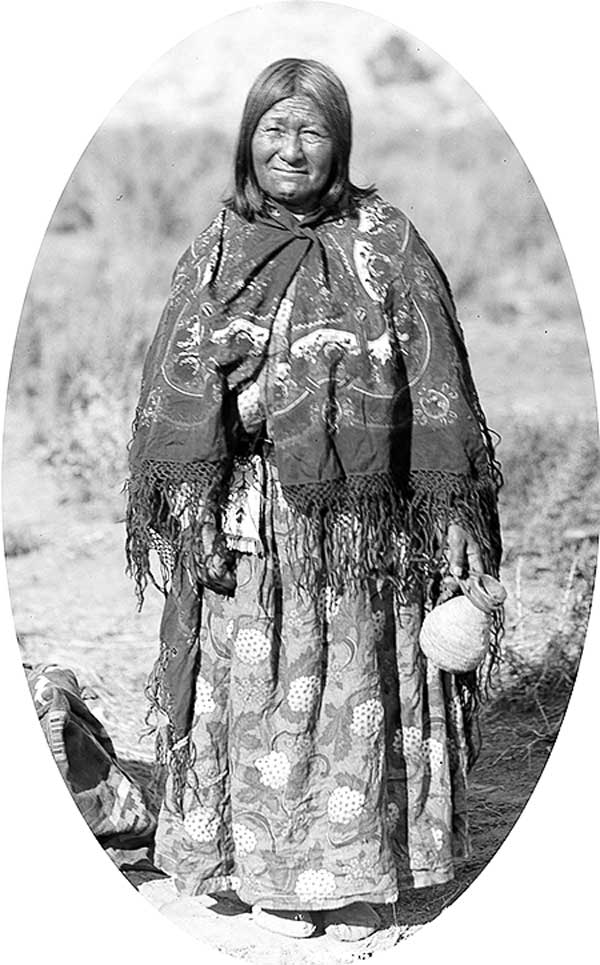
But who was Chipeta? According to the Women of the West Museum in Denver, White Singing Bird, as Chipeta was also known, was born in 1843 and grew up in the south central mountains of Colorado. She married Ouray when she was 16. Press reports commented on her beauty and grace.

She was called Queen of the Utes, though the term was meant in a derogatory way by a Rocky Mountain News reporter who described her presiding over Ute “vermin” in her buckskin.

But then Denver poet Eugene Field wrote a poem dedicated to Chipeta and her role in saving white hostages from Utes after the Meeker Massacre, and an adoring public embraced her for her wisdom, beauty and grace. She became as famous as Ouray.

Today, there are streets, places and organizations all over Colorado and Utah named after Chipeta, writes Dr. Colorado Thomas Noel. Other items share the name as well. For example, the Colorado moth Tricholita chipeta and the potato variety developed by agronomist at Colorado State University in Fort Collins.
“When Chipeta was a baby, a band of Tabeguache Utes found her crawling in the ruins of a Kiowa Apache village, the only survivor of a savage attack.
The Utes adopted her and raised her as their own. She became a caretaker for Ouray’s son after Ouray’s first wife died. The two became close and married. Ouray and Chipeta were inseparable. It was rare for Ute women to travel with their men, but the two traveled together as Ouray negotiated with whites and other Ute leaders for Ute lands. Ouray received a salary for his role as an interpreter and hunter for the Los Pinos Agency. Other Utes became suspicious and assumed that the money he received was in return for selling off Ute lands.” Noel writes.

But while Ouray was no longer welcome with certain Ute bands, Chipeta was accepted with open arms by everyone, according to Noel.

“The counsel she kept with other Utes became invaluable to Ouray. Soon, Chipeta was giving counsel to visiting chiefs, tribal headmen and U.S. functionaries. She continued in this role for the rest of her life. It was Chipeta who stayed up all night with Ouray as the White River Utes fought with the U.S. Cavalry up north, convincing him not to ride to their aid and thus, preserving what peace the Utes had left. After Ouray died and the Utes were stripped of their remaining Colorado lands, she continued to advocate for her people and for peace.”

The U.S. Government moved the Uncompahgre Utes to the Uintah Reservation in Utah. Ouray himself died in 1880. Three years later, Chipeta remarried and later adopted four children, says Women of West Museum.

“After being banished to Utah, she was forgotten. On the Uintah Reservation, the Utes faced a harsh climate far different than their ancestral homelands in Colorado. They were told to farm, but most of the land wasn’t arable. The government allowed miners and others to trick the Utes and steal land from them. Chipeta survived on government commodities. Then the government subdivided the reservation and took more land away. Yet Chipeta’s spirit wasn’t broken and she still spoke for many Utes. In 1897, her brother McCook represented her opinions in Washington D.C.,” according to Noel.

The public began to notice her again. People sent her gifts. She was invited to Colorado to visit Montrose and the Uncompahgre Plateau.

“President Taft insisted she ride with him on his train to watch the opening of the Gunnison Tunnel. She was once again Queen of the Utes,” Noel said.

She died in 1924 on the reservation in Utah.

“When she died, the city of Montrose insisted she be exhumed from her humble grave in Utah and buried in Montrose in an elaborate ceremony,” Noel said. “Her brother McCook agreed and today, she rests there in her ancestral homeland.”
Chipeta, who had been known to dine with Kit Carson’s family and in the lavish homes of Indian affairs agents, was eulogized in Washington D.C. newspapers and was well-loved. 
###
By Rob Carrigan
###
Top Photo Information:  
Chipeta in a visit to Washington D.C.
Bottom photo:
Chipeta as an older woman, near Montrose, about the time of completion of the Gunnison Tunnel.